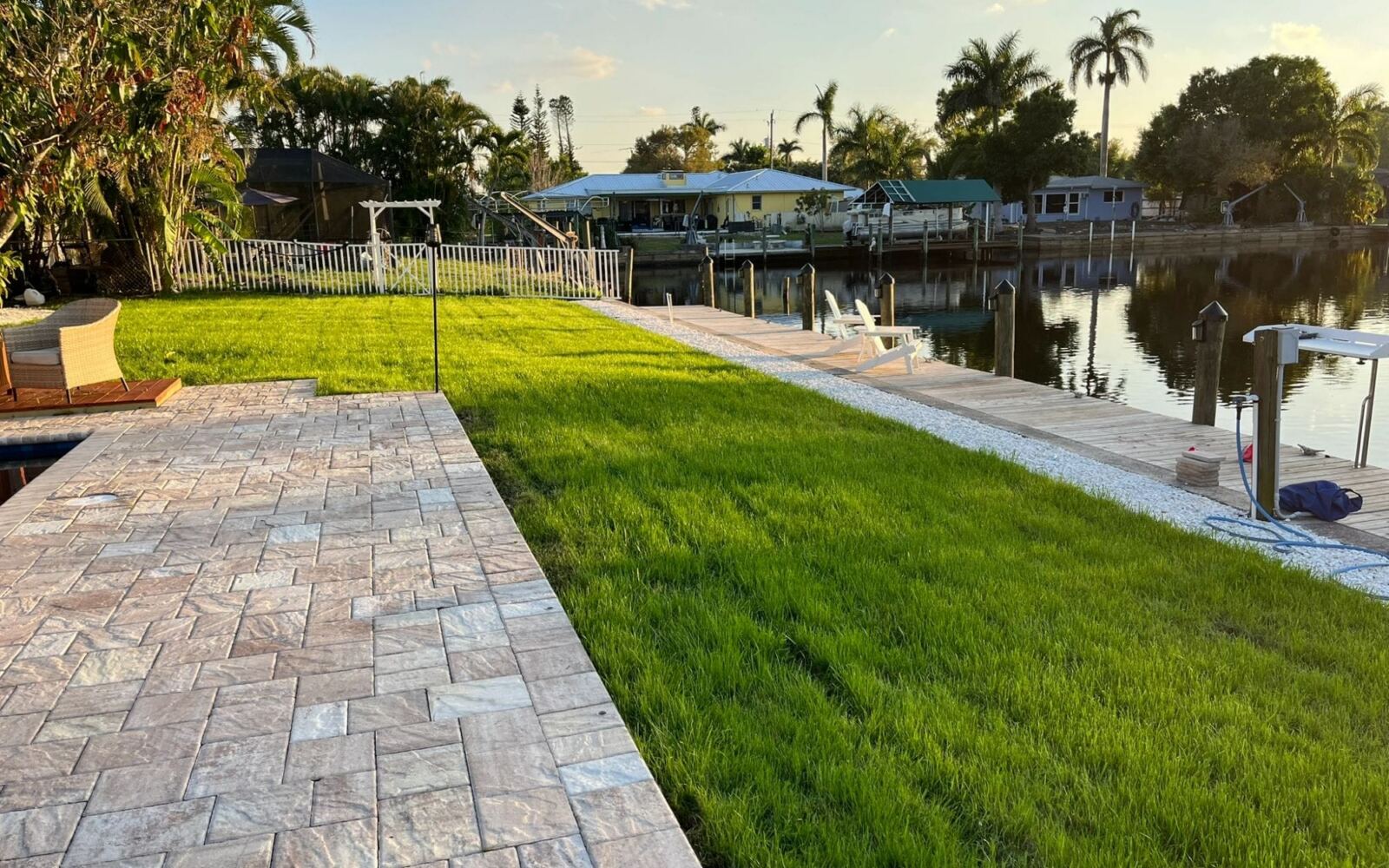
A paver patio or driveway that has developed a dip, a rocking paver or a low corner by the downspout is not failing because the pavers are bad. Pavers are concrete. They rarely break. What moves is the ground underneath them, and in Southwest Florida that ground is usually sand.
What is actually under your pavers
A paver surface is a stack of layers. At the bottom is the soil. Above that is a compacted base of crushed stone that carries the weight. Above that is a thin bedding layer of sand that lets each paver sit level. The pavers themselves are the top layer, and the joints between them are filled with sand so the whole field locks together and acts like one surface.
When a paver sinks, one of those layers has moved. The pavers are just the part you can see.
The four things that cause dips here
1. Water running under the edge
This is the most common cause we see. Where a paver field has no solid edge restraint, or the edge has been buried and then eroded, water running off the surface undercuts the bedding sand and carries it away. The pavers along that edge drop first, then the ones behind them follow. Roof runoff that lands on one spot will do it on its own within a couple of rainy seasons.
2. Not enough base, or base that was never compacted
Sand alone under pavers will rut. So will base material that was dumped and raked rather than compacted damp in layers. A patio that people walk on can survive a thin build-up for years. A driveway with a truck or an RV on it cannot, and that is where you see ruts in the wheel tracks rather than a general dip.
3. Something soft was buried underneath
Organic material rots. If topsoil, roots, stumps or old mulch were left in place and built over, the ground keeps losing volume for years afterwards and the surface follows it down. The dip tends to be a distinct shape rather than a general sag.
4. A trench that was backfilled loose
Irrigation lines, electric runs and drain pipes are all reasons someone opened a trench. Loose backfill settles. A narrow low line running straight across a patio usually has a pipe under it.
What a proper repair involves
The repair is not complicated, but it does involve lifting pavers rather than topping them up. In general terms it means:
- Lifting the affected pavers and setting them aside in order.
- Finding out what moved: soft soil, a washed-out bedding layer, a trench, or a missing edge.
- Rebuilding and compacting the base to the right level in layers, not in one go.
- Re-screeding the bedding sand to a consistent depth.
- Resetting the pavers, restoring the edge restraint, and re-sanding the joints.
Filling a dip with sand from above, or lifting pavers and packing sand under them, is the repair that comes back. It leaves the cause in place.
What to check before you call anyone
Two minutes of looking tells a contractor a lot. Where does the water go when it rains hard? Is the low area near a downspout, a valley in the roof, or the end of a slope? Does the edge of the paver field have a solid restraint, or does it simply end in soil and grass? Is the dip a narrow line, a corner, or a general sag across the middle? Photos of all of that, taken during or just after rain if you can, make the first conversation much more useful.
When the fix is drainage, not pavers
If the same area holds water after every storm, resetting the pavers buys time but does not solve anything. The water has to have somewhere to go first. That might mean redirecting downspouts, reshaping the grade around the patio, or a drainage solution that carries water past the area. Once the water is handled, the paver repair lasts.
If your pavers have started to move, send a few photos with your estimate request and we will tell you what we think is going on before anyone comes out. Related reading: fixing standing water in your yard and what paver base actually does.