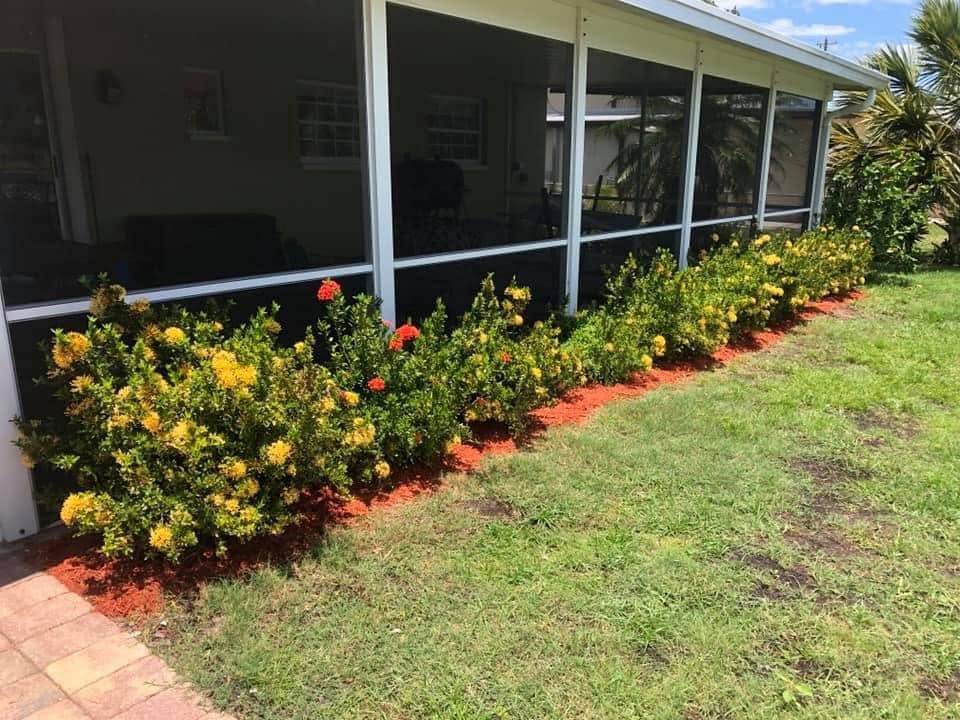
Water sitting along the edge of a lanai after every storm is one of the most common calls we get, and it is rarely caused by unusual rain. It is caused by the shape of the ground next to a hard surface that cannot absorb anything.
Why that particular strip stays wet
A lanai, pool deck or slab sheds every drop that lands on it. The ground beside it has to take that water plus whatever falls on it directly. If the ground there is flat, or tips back toward the house, the water has nowhere to go and sits until it soaks away or evaporates.
Several things push that strip toward flat over time:
- Settlement. Backfill around a slab or cage footing compacts for years after construction, and the ground beside the slab drops with it.
- Bed build-up. Years of adding mulch, soil and rock to beds against the house raise the bed until it is level with or higher than the surrounding lawn, trapping water against the slab.
- Roof and gutter runoff. A valley in the roof, or a downspout that discharges at the corner of the lanai, concentrates a large area of rainfall into one small patch of ground.
- Screen-cage gutters. Water shedding off the cage lands in a straight line, and that line is usually right where the problem is.
- Compaction. Foot traffic and equipment along the same strip pack sandy soil tight, so it absorbs less than it once did.
Why it matters beyond the puddle
Standing water next to the house is worth fixing sooner rather than later. It keeps the soil at the slab edge saturated, kills turf and bedding plants that will not sit wet, breeds mosquitoes within days, and stains pavers and concrete over time. Where water pools against a screen enclosure footing it also keeps the anchor area wet, which does the structure no favours.
What a fix usually looks like
There is no single answer, because the right one depends on where the water comes from and where it can be sent. In practice it is usually one or a combination of:
- Regrading the strip so it falls away from the slab. Often this means removing built-up bed material rather than adding anything, then finishing with topsoil and sod or new planting.
- Redirecting downspouts and cage runoff so a concentrated flow is carried away from the corner instead of dumping there.
- A shallow swale that moves water around the house to somewhere it can safely spread out.
- A French drain where the grade genuinely cannot be changed, built with clean #57 limestone so water can move through it, and with a sensible outlet.
- Changing what is planted there once the water is handled, so the strip is no longer bare soil that washes.
The part that matters most is the outlet. A drain with nowhere to discharge is a buried pond. Before installing anything, the water needs a legal, sensible place to go, and on flat lots that is the real design work.
What to look at before you call
Watch it rain, if you can. Where does the water arrive from, and how far does the puddle extend? Take a photo during the storm and another an hour after it stops, so the extent and how long it lingers are both clear. Note where your downspouts end and whether the beds against the house sit higher than the lawn.
Send those with a drainage request and we can usually tell you what is going on before we visit. Related reading: fixing standing water in your SWFL yard and the best materials for filling low spots.