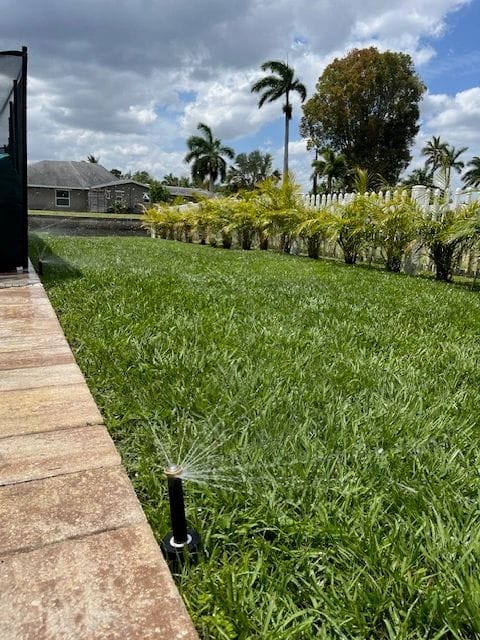
Low pressure shows up as heads that dribble instead of throwing, a zone that will not lift its rotors, or dry rings in the lawn where coverage used to overlap. It is worth working through the likely causes in order, because the cheap ones are also the common ones.
First: is it one zone or all of them?
This single question splits the problem in half.
- One zone weak, the rest fine. The cause is almost always in that zone: a leak, a broken head, a partly open valve, or too many heads for the water available.
- Every zone weak. The cause is upstream of the zones: the supply, the pump if you have one, a main-line leak, a filter, or a pressure regulator.
Common causes, roughly in order
A leak in the zone
A cracked lateral line or a broken riser bleeds off pressure before it reaches the heads at the end. The tell is a wet or unusually green patch that stays damp between cycles, or water bubbling up when that zone runs.
Clogged nozzles or filters
On well water especially, fine sand and mineral build-up block nozzle screens and drip filters. Symptoms build gradually over months rather than appearing overnight. Cleaning or replacing the nozzle often restores the zone completely.
Heads that were added over time
A zone is designed for a certain number of heads at a certain pressure. Add three more for a new bed and every head on the zone weakens. This is a design issue, not a fault: the fix is usually splitting the zone rather than chasing parts.
Valve problems
A valve that is only partly opening, a torn diaphragm or debris under the seat all reduce flow to a single zone. If a zone works when you open the valve by hand but not from the controller, that points at the valve or its wiring rather than the pipe.
Pump and well issues
Many properties here irrigate from a well. Weak pressure across everything can mean a failing pump, a waterlogged pressure tank, a clogged intake screen or a dropping water table late in the dry season. Pump and well work is its own trade, and we will say so when that is what we find.
Backflow, filters and regulators
A partly closed backflow valve after maintenance is a classic. So is a filter nobody has cleaned since the system was installed, or a pressure regulator that has failed.
What you can check safely yourself
- Run each zone from the controller and watch it. Note which heads are weak and where.
- Look for wet ground, sinking soil or unusually lush grass that suggests an underground leak.
- Check that the main shut-off and backflow valves are fully open.
- Unscrew a nozzle and look at the screen for sand or scale.
- Check nothing has been planted or built over a head, which mimics low pressure by blocking spray.
Leave the valves, wiring and anything on the pump side to someone who works on them. It is easy to turn a cheap repair into an expensive one.
When it is not pressure at all
Coverage complaints often turn out to be aim, spacing or plant growth rather than pressure: hedges that have grown into the spray pattern, heads sunk below turf level, or mismatched nozzles putting different amounts of water across one zone. Those are quick fixes, and they are also the most common thing we find.
If you would rather not work through it yourself, an irrigation system check covers running every zone, finding what is weak and telling you what it needs. If your beds are on spray heads, it is also a good moment to read about drip versus spray before paying to repair something you may want to change anyway.